TEDxTulane
My talk on youth political participation and the barriers that keep young people out of the systems that govern them.
The Myth of the Apolitical Youth
In March 2022 I gave a TEDxTulane talk, The Myth of the Apolitical Youth, on how political systems shut young people out. I drew on my experience co-founding and leading the Youth Coalition For Organ Donation, whose opt-out proposal became a bill in New York, to challenge the idea that political influence depends on age.1,2
My argument was that young people are already stakeholders. Decisions about their education, environment, healthcare, and economic futures are made without them. In the talk I looked at why that exclusion persists, what it costs democracies, and what happens when young people stop asking permission and build their own platforms for influence.
My examples were things young people have already done by working around institutional barriers.
The Full Talk
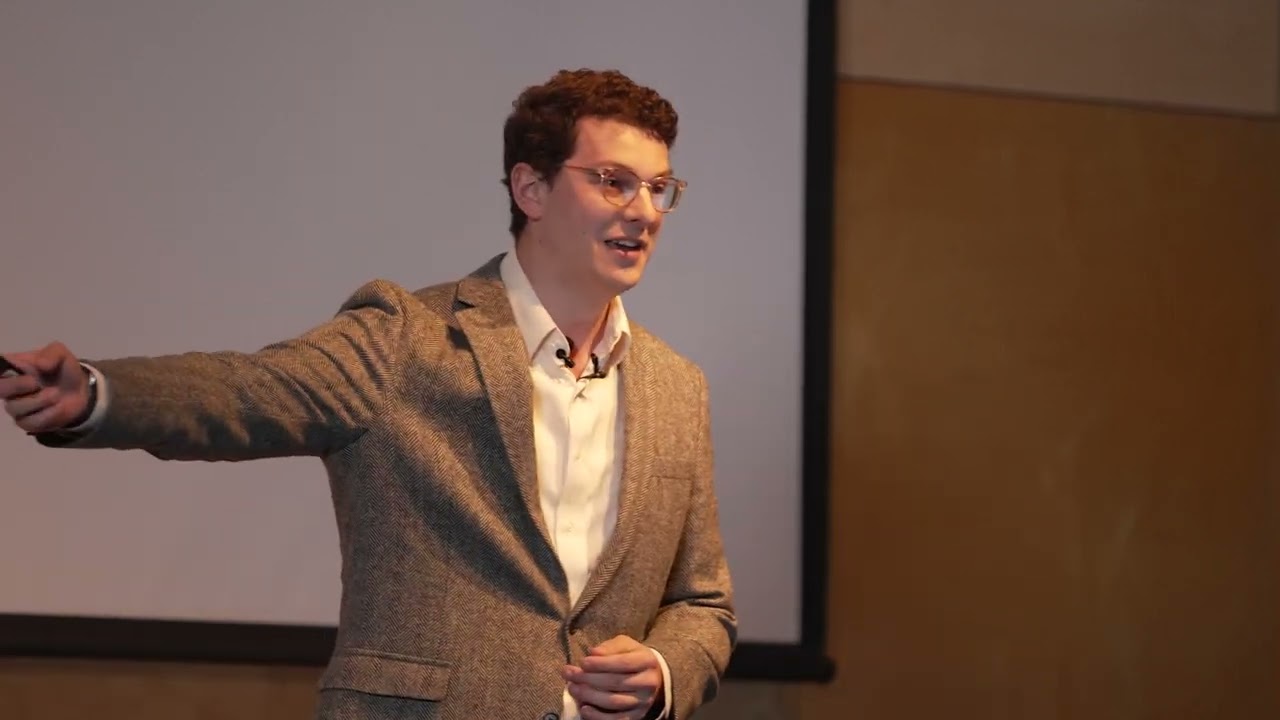
TEDxTulane
The Argument
Youngpeoplealreadyhaveastakeinthedecisionsmadeaboutthem,andthesystemsthatleavethemoutareweakerforit.
Youth political agencyPolicyaffectspeoplefrombirth,sotherighttotakepartinciviclifeshouldstartwellbeforethevotingage.
Who gets to participateIusedtheYouthCoalitionForOrganDonationasmymainexample:agroupofyoungpeoplewhogotanopt-outorgandonationbillintroducedinNewYorkwithoutwaitingtheirturn.
The Youth Coalition For Organ DonationYoungpeoplehaveshowntheycanleadpolitically.Iaskedwhetherexistinginstitutionsareabletomakeroomforthem.
Institutional barriersKey Takeaways
The numbers behind the argument.
Half the world is under 30, yet people 30 or under hold fewer than 3% of seats in parliaments worldwide, according to the Inter-Parliamentary Union. I see that as structural exclusion.3
I co-founded the Youth Coalition For Organ Donation at fifteen and led it for more than seven years. Its legislative work in New York was done by young people, which cuts against the idea that political influence depends on being able to vote.
Our coalition grew to more than 3,000 members across the US and abroad, and our opt-out proposal became a bill in the New York State Assembly. Young people planned and carried out all of it, outside the usual political channels.2
The voting age of 18 is treated as the natural start of political participation, but it is a convention. Tax, education, environmental, and healthcare policy affect people long before they can vote on any of it.4
I argued that a democracy should be judged by how well it includes the people it has left out, young people among them.
Sources
- 1The Myth of the Apolitical Youth · TEDxTulane, Mar 2022
- 2WNY Teens Nominated for American Red Cross Award for Organ Donation Coalition · Spectrum News, 2021YCOD’s 3,000 members across the US and abroad; opt-out bill awaiting action in New York.
- 3Youth representation in parliament flatlines for the first time in 12 years · Inter-Parliamentary Union, Apr 2026Half the world’s population is under 30; 2.8% of MPs are aged 30 or under.
- 4The Constitution: Amendments 11–27 (Amendment XXVI) · U.S. National Archives, Ratified July 1, 1971Sets 18 as the U.S. voting age.